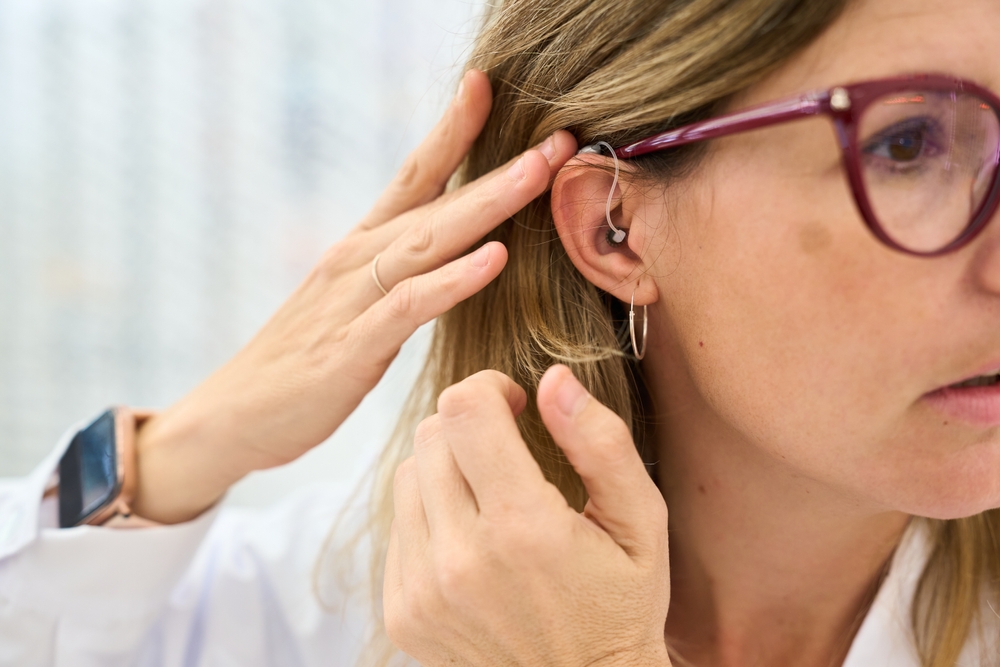
A primary reason individuals put off addressing auditory deficits is the assumption that assistive devices will be unsightly or awkward to wear. For decades, legacy acoustic amplifiers were cumbersomely large, highly conspicuous, and culturally tethered to physical senescence. Furthermore, many individuals harbored deep anxieties about social isolation, fearing others would exclude them from discussions based on assumptions of cognitive decline or profound auditory deficits.
For many people, this image has stuck, making them hesitant to take the next step. However, contemporary medical engineering has ensured that current hearing solutions look and function in a completely unexpected manner. Revolutionary breakthroughs in micro-component miniaturization and ergonomic design have rendered these devices incredibly compact, ultra-lightweight, and virtually unnoticeable.
If you have spent years avoiding an audiologist due to the appearance of old devices, now is the perfect moment to explore today’s sleek alternatives!
The Outdated Devices of Your Imagination Have Been Replaced
If you close your eyes and picture a hearing aid, you might imagine something large, hooked over the ear, and visible from across the room. If that’s the case, you’re thinking about hearing aids circa the 1980s and ’90s.
Since then, the entire category has evolved. Unprecedented breakthroughs in microchip architecture, material sciences, and digital signal processing have utterly revolutionized modern aesthetics. They’re smaller, sleeker, and designed to blend in (or disappear entirely).
Many of today’s devices sit fully inside the ear canal, making them virtually invisible during everyday conversation. Alternatively, post-auricular models are constructed with such streamlined dimensions that they disappear against the scalp, customizable to complement individual skin and hair coloration.
Primary Hearing Aid Styles, From Invisible to Barely There
For those investigating what these advanced acoustic tools look like in real life, consider this straightforward guide:
Deep Canal Solutions: Invisible-in-Canal (IIC)
For total subtlety, these instruments have no medical equal. IIC devices sit completely inside the ear canal and are custom-made to fit your ear. From a normal conversational distance, they’re essentially invisible. They remain an exceptionally sought-after solution for patients with mild-to-moderate deficits who refuse to compromise on cosmetic privacy.
Receiver-in-Canal (RIC) and Receiver-in-the-Ear (RITE) Designs
This is the most common style today. A tiny component sits behind the ear, connected by a nearly invisible wire to a small speaker in the ear canal. To onlookers, this streamlined design closely mirrors fashionable consumer electronics or sports earbuds. Most people won’t notice them unless they’re looking.
Traditional Behind-the-Ear (BTE) Reimagined
These sit fully behind the ear and are slightly larger, but they’re still far more streamlined than older versions. Clinically indicated for profound or severe hearing deficits, they deliver immense acoustic power without the outdated, conspicuous mass of the past.
The bottom line is simple: modern assistive hearing systems are crafted to serve your life quietly, not to draw attention to your ears.
The Functional Revolution: Modern Instruments Are Tiny Supercomputers
The recent metamorphosis of hearing instruments extends far beyond mere cosmetic downsizing. Contemporary devices are essentially miniature smart hubs rather than historical medical hardware. Many variants integrate high-speed Bluetooth protocols, allowing you to route phone calls, podcasts, or multimedia audio straight to your ears without external headphones.
Managed via intuitive phone interfaces, these systems give you the power to mix sound levels or change situational profiles without ever touching your ears. Should you transition into a loud social environment, you can instantly recalibrate your directional microphones via your phone screen. Furthermore, lithium-ion rechargeable cells have entirely eliminated the need to fiddle with microscopic, short-lived zinc-air batteries. The process is as simple as placing the units into their charging dock each night, identical to charging your cell phone.
Getting Over the Fear and Stigma of Hearing Devices
Even with this encouraging information, taking the initial step toward treatment can induce anxiety. Acknowledging a sensory deficit and investigating rehabilitation options often forces a difficult confrontation with our own vulnerability and bodily changes. This can make us feel helpless and like we aren’t fully in control of what’s happening to our bodies.
But here’s a different way to look at it: Hearing aids aren’t a sign that something has gone wrong. Rather, they represent a proactive response to natural biological evolution—a transition shared by every human being. Adopting this tech is definitive proof that you are actively taking charge of your health to empower and protect your daily cognitive function.
Visualize the freedom of utilizing a completely covert acoustic system that restores your ability to track jokes, engage in crowded restaurants, and capture every nuance of the activities you love. This is the definition of true personal empowerment!
Discover the Reality of Modern Otolaryngological Solutions
The most effective method to permanently banish an obsolete stereotype is to personally examine current clinical options. We warmly welcome you to tour our practice, consult with our audiologists, and review our product lines with absolutely no financial or purchase obligations. Treat this as a risk-free exploratory step to comprehend the incredible aesthetic shift that has occurred in our field.
You will likely be utterly delighted to discover how microscopic, physically seamless, and high-performing today’s options truly are! Please contact our patient care coordinators or utilize our digital portal to secure your consultation this week.