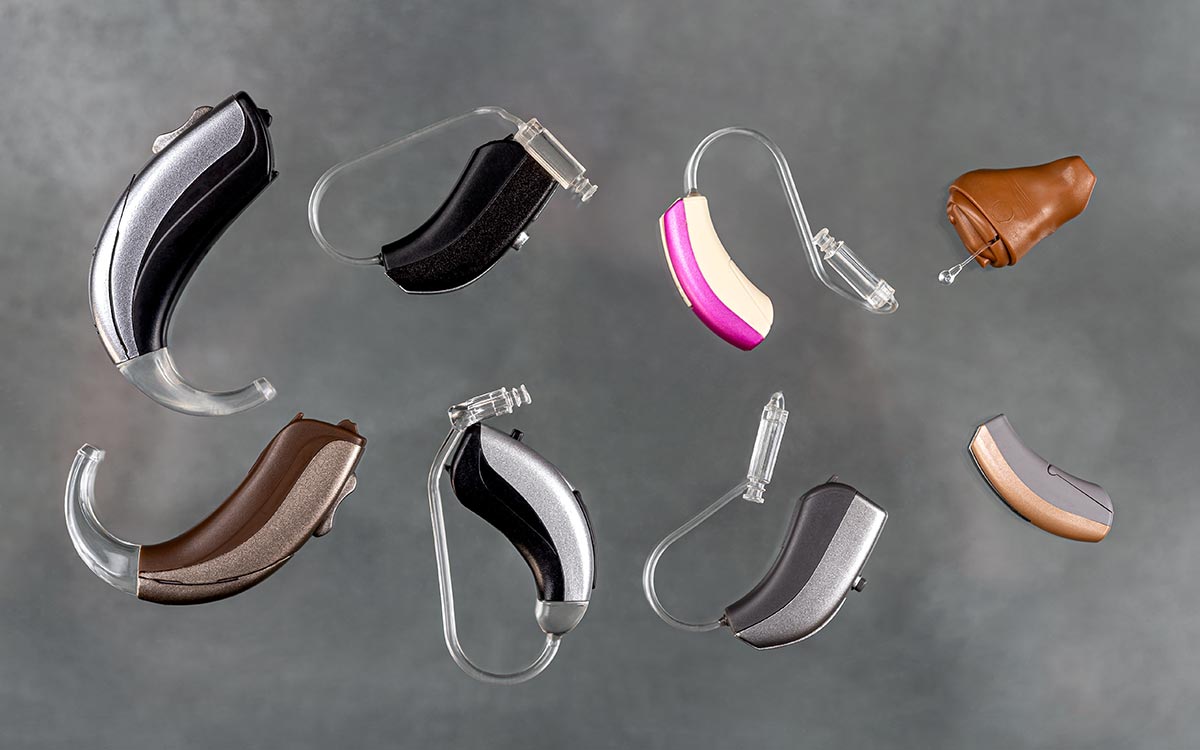
The sheer amount of hearing aid designs and technology levels on the market today can make the selection process feel complicated. Rest assured that there is a hearing device customized to every lifestyle and degree of impairment. Success lies in locating the specific aid that meets your personal preferences.
Gaining a clear understanding of common hearing aid categories will empower you to make an educated decision for your hearing health. Today, we’re summarizing the various hearing aid styles and what makes each one unique.
Understanding In-the-Canal (ITC) Units
What they are:
These hearing aids are placed partially inside the canal, making them visible only slightly from the outside.
Why users choose them:
- More subtle than larger models
- Custom-molded for comfort
- Designed to treat low to moderate hearing impairments
First-time wearers frequently gravitate toward ITC aids because they strike an ideal compromise between size and performance.
IIC (Invisible-in-Canal) Engineering
The Concept:
As the most compact custom selection, IIC aids represent the smallest available style. They are inserted deep within the canal to remain hidden from view.
User Pros:
- The best choice for patients prioritizing appearance
- Microphone placement helps mimic the ear’s natural sound collection
- An ultra-light build makes them easy to wear all day
Because of their small stature, IIC devices typically work best for mild to moderate hearing loss and for those who prefer an almost invisible option.
ITE (In-the-Ear) Model Summary
Product Information:
A custom hearing aid fits snugly within the outer ear, available in both full-shell and half-shell configurations. Every unit is specifically personalized to match your ear’s unique shape.
The Benefits:
- The bigger size makes it feasible to include more internal components and longer-lasting batteries
- Provides a more manageable process for those who struggle with tiny accessories
- Capable of providing sufficient power for severe hearing needs while remaining in-the-ear
Many patients pick ITE devices because they provide a streamlined, self-contained design that doesn’t hook over the ear.
Traditional Behind-the-Ear (BTE) Models
Description:
These devices rest on the outer portion of the ear’s anatomy. Audio is sent through an ultra-fine tube or a personalized mold in the canal.
Reasons for Choosing:
- Regarded as one of the most dependable and robust designs available
- Can be programmed to assist users with everything from mild to profound loss
- The spacious housing allows for high-tech extras and built-in power cells
If you need a sturdy hearing aid that is simple to operate and offers high-power output, the BTE style is ideal.
RIC (Receiver-in-Canal) Overview
What they represent:
While they match BTE units, RIC aids set the speaker directly in the canal for better sound delivery.
Why people select them:
- Minimizes the “plugged up” sensation for more pure hearing
- Offers a very low-profile appearance that is comfortable for almost everyone
- A versatile solution that works for various degrees of auditory needs
RIC devices are one of today’s most common models, thanks to their blend of comfort, aesthetics, and performance.
Understanding Extended-Wear Systems
Operational Details:
Extended-wear models are semi-permanent devices that an expert fits into the ear for an interval of several weeks.
Why individuals choose them:
- Provides a hassle-free journey with no daily maintenance required
- Sitting deep in the ear makes them completely hidden from view
- Built to withstand the rigors of sleep, exercise, and showering without being removed
If you want an auditory solution that requires zero daily thought, the extended-wear style is perfect.
Bluetooth-Enabled Hearing Aids
What they are:
Bluetooth-ready hearing aids allow for a wireless digital bridge between your hearing technology and your smart devices.
Why users choose them:
- Stream calls, music, and audio directly to the hearing aids
- Allows for quick, subtle adjustments to your hearing aids through digital software
- Provides the ultimate in convenience for those who use smartphones regularly
You can find Bluetooth capabilities integrated into a variety of form factors, from RIC and BTE to custom ITC designs.
Understanding Middle-Ear Implant Technology
What they represent:
Middle-ear implants are specialized tools that use mechanical vibration to enhance hearing via the middle ear.
Why implants are utilized:
- Serves as an essential alternative for those who find no success with traditional amplification
- Ideal for users who experience chronic irritation from standard molds
Candidates for middle-ear implants should complete an exhaustive evaluation by a hearing specialist.
Choosing the Right Style for You
Selecting a hearing aid is a personal journey that takes into account your hearing severity, lifestyle habits, and visual preferences. An audiology professional is your best resource for comparing these options and finding a match for your daily routine.
Begin your journey to better sound by setting up an auditory test now. This simple step is the foundation for improved hearing and better connections with those around you.
Sources:
https://www.mayoclinic.org/diseases-conditions/hearing-loss/in-depth/hearing-aids/art-
20044116
https://www.hearinglife.com/hearing-aids/types
https://www.nidcd.nih.gov/health/hearing-aids