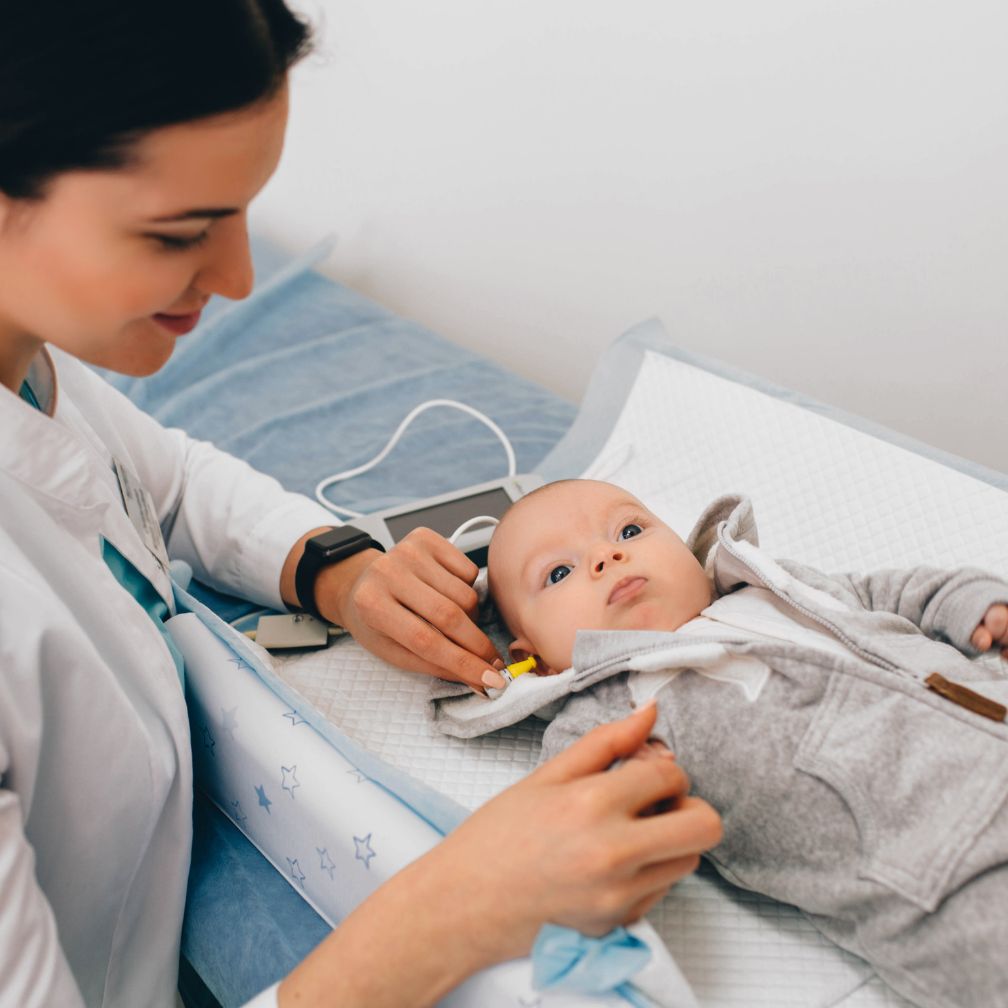
For parents holding a newborn, getting a diagnosis of early auditory impairment naturally causes profound stress and concern. Yet the positive perspective remains that via early care and screening, infants experiencing hearing loss are able to grow and succeed. Beyond doubt, these children can build speech patterns, relational abilities, and robust connections with their society, realizing a wonderful life!
Utilizing wearable hearing aids and state-of-the-art cochlear implants offers two effective treatment methods for supporting babies with hearing impairment. In the text below, we examine how these technologies function and how to decide which one is right for your child.
Grasping the Basics of Pediatric Hearing Loss
Hearing deficits among babies frequently result from an array of medical influences, including:
- Specific genetic mutations (even in families with zero history of impairment)
- Early prenatal viral exposures including cytomegalovirus (CMV) or rubella
- Physical birth-related trauma, such as neonate oxygen loss or preterm birth
- Specific therapeutic drugs utilized within specialized newborn intensive units
Which measure offers the greatest impact? Immediate objective assessment. Owing to this mandate, babies throughout the United States complete systematic hearing checks preceding their departure from the facility. Qualified pediatric hearing professionals routinely implement the “1-3-6” guideline:
- Initial baseline screening completed inside 30 days post-birth
- Diagnosed by 3 months
- Direct clinical management (utilizing hearing tools or specialized rehabilitation) initiated before 6 months of age
Reaching these target timelines offers infants an unparalleled opportunity for normal speech, expressive language, and cognitive progression. Should you require assistance regarding these auditory screens, your family pediatrician stands eager to guide you!
Hearing Aids for Infants
For infants impacted by mild to severe hearing loss, specialized hearing aids consistently serve as the foundational first step. Such compact, fitted instruments intensify sound signals, helping infants distinguish human speech and natural sounds more clearly.
Customized infant hearing instruments operate as:
- Completely safe for deployment on babies just a few weeks after birth
- Designed with soft, skin-friendly ear inserts that adjust as the child grows
- Outfitted with secure, tamper-resistant battery latches and pediatric-specific features
- Expertly tuned by a certified pediatric audiologist to accommodate your child’s specific hearing levels
As your child matures, hearing instruments necessitate frequent maintenance to preserve physical comfort and functional efficacy.
Cochlear Implant Options for Newborns
If an infant is diagnosed with severe to profound sensorineural hearing loss that fails to respond adequately to conventional hearing aids, a surgical cochlear implant might be advised. Unlike standard acoustic hearing devices, cochlear technology:
- Are positioned within the inner ear through a surgical process to directly stimulate the auditory nerve
- Successfully bypass non-working zones within the inner ear apparatus
- Process acoustic energy into clear electrical signals that stimulate hearing nerve pathways directly
Surgically placed cochlear implants are:
- Formally cleared by the FDA for pediatric patients aged 9 to 12 months and older
- Maximally beneficial when supported through early developmental habilitation and strong home support
- Recommended exclusively following detailed multi-disciplinary testing by a certified audiologist and otolaryngologist
Such a comprehensive process requires high-resolution imaging, detailed hearing tests, and in-depth discussions surrounding achievable long-term goals.
Comparing Hearing Aids and Cochlear Implants: Key Differences
- Mild to severe levels of impairment utilize Hearing Aids; Severe to profound hearing loss necessitates Cochlear Implants
- Non-Invasive wearable design: Hearing Aids; Invasive surgical installation: Cochlear Implants
- Standard sound amplification logic: Hearing Aids; Direct conversion to electrical signals: Cochlear Implants
- Fitting starts at early infancy: Hearing Aids; Procedure starts at 9-12 months: Cochlear Implants
Summary Thoughts: Supporting Your Child’s Hearing Journey
If your newborn faces a confirmed hearing impairment diagnosis, you can rely on excellent technological options alongside extensive professional backing. Through the guidance of experienced pediatric audiology teams, most children construct language capabilities completely equal to their hearing peers.
Whether your youngster qualifies for external hearing aids or surgical cochlear implants, early intervention establishes a foundation for lifelong communicative success.
Are you seeking answers about your child’s overall hearing wellness? Reach out to our specialists today to schedule a thorough assessment and individualized management strategy.