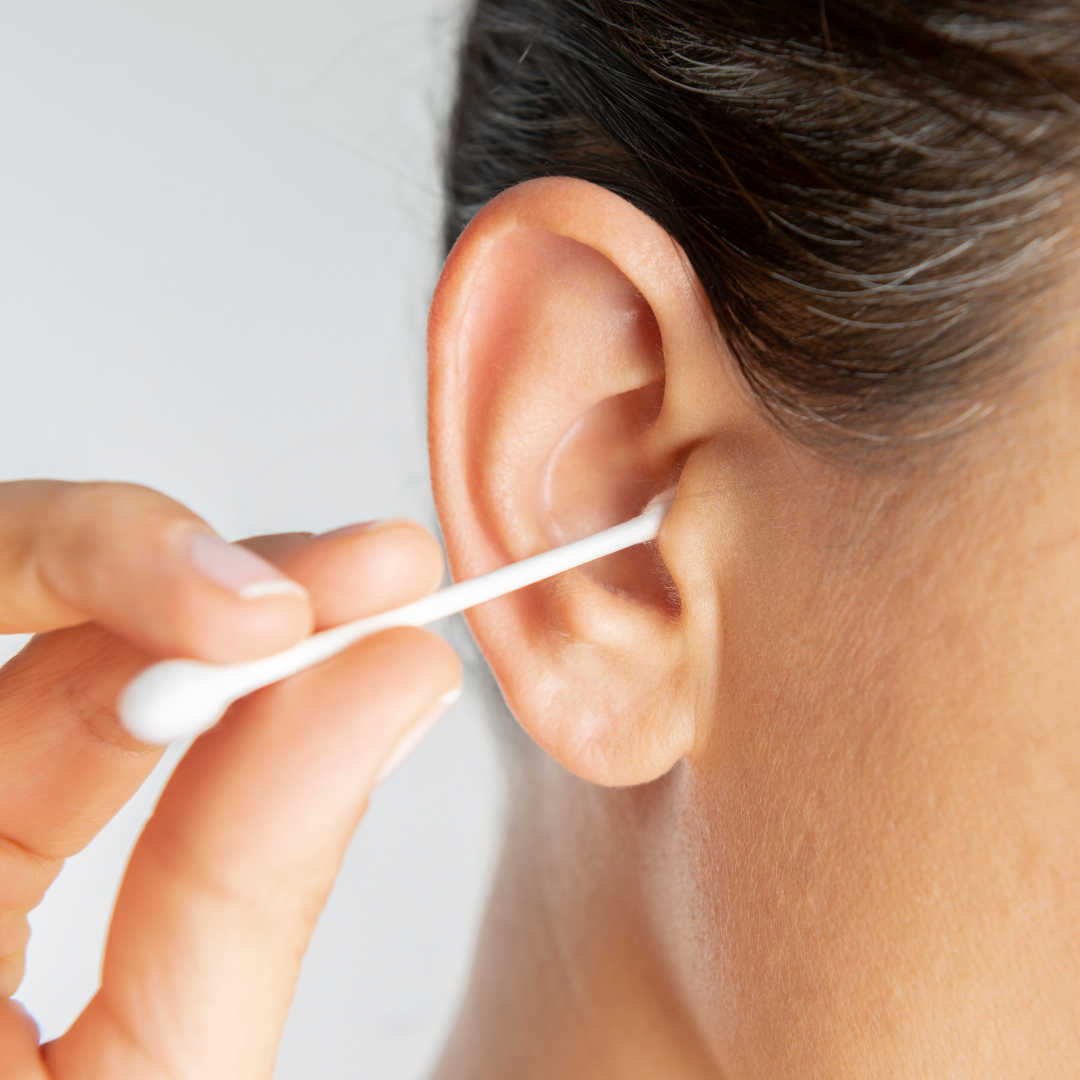
Although cotton swabs feel like accessible ear-care tools, introducing them into the canal hinders self-cleaning mechanisms and may harm your hearing. We can determine whether earwax actually needs removal and recommend a method suited to your ear health. Most ears do not mandate routine physical scrubbing; yet, if accumulation occurs, we guide patients through safe cerumen management.
What Makes Q-Tips Harmful to Ear Health?
Earwax, or cerumen, is not dirt. This substance captures environmental dust, restricts bacterial colonization, conditions the delicate canal walls, and defends fragile skin. Normal jaw articulation and progressive skin turnover transport old cerumen toward the external ear opening, where it naturally detaches.
Pushing a cotton applicator past the canal opening disrupts this natural physiological transport. While the fibrous tip might extract superficial wax particles, it predominantly forces deeper accumulations toward the tympanic membrane. Continuous swab usage packs loose secretions into a hardened mass, generating an occluded sensation that tempts patients into additional probing.
Cotton applicators are suitable for tracing the exterior folds of the ear, but they must remain entirely outside the canal opening.
How Cotton Swabs Cause Physical Trauma to the Ear
The epidermal tissue coating the ear canal is thin and tears under minimal friction. Tiny skin lacerations provoke pain and bleeding while forming entry pathways for pathogens, multiplying the chance of external ear infections. Furthermore, the cotton fibers may separate from the stick, leaving a foreign body lodged within the canal.
Common mechanical traumas from swabs include:
- Cerumen forced into dense canal impaction
- Localized scratches, severe irritation, tissue edema, or bleeding
- Secondary bacterial otitis externa
- Cotton swab fragments trapped inside the auditory canal
- Tympanic membrane perforation or tear
- Mechanical trauma to the middle-ear ossicles behind the eardrum
- Acute hearing loss of a temporary or permanent nature
- Acute tinnitus, vertigo, or intense otalgia
Serious injuries are uncommon, but they can happen if someone bumps the user’s arm, the swab slips, or it is inserted too far.
Recommended Schedules and Timelines for Cerumen Removal
Most healthy adults have no clinical need to extract earwax on a set timetable. Normal ears migrate cerumen toward the opening constantly, allowing routine bathing to cleanse the visible exterior. Overzealous hygiene parches canal tissue, incites chronic irritation, and increases vulnerability to bacterial infection or deep plugs.
Professional removal is necessary when wax obstructs the canal, obscures our view of the tympanic membrane, hinders a hearing aid, or creates physical symptoms.
Safe and Approved Home Techniques for Earwax Care
If earwax is not causing symptoms, leaving it alone is usually the safest option. Simply cleanse the external ear using a damp, gentle washcloth, allowing the internal canal to clear independently.
If cerumen requires softening, we might suggest an over-the-counter preparation or ear drops formulated with carbamide peroxide, mineral oil, saline, or glycerin. Apply only the specified dosage and never exceed the designated application duration outlined on the label. Stop if the drops cause pain, marked dizziness, rash, or worsening symptoms.
Home irrigation is not appropriate for everyone and should only be attempted after a professional confirms it is safe and explains the technique. Never attempt to flush your ear canal with a pressurized dental water irrigator. Avoid hazardous gadgets including ear candles, sharp metal loops, camera-assisted tools, hair clips, and home vacuum extractors. These hazardous instruments often cause cutaneous burns, sharp cuts, eardrum ruptures, or compounded cerumen impaction.
Recognizing When Earwax Requires Clinical Intervention
You should book a clinical appointment if your ear feels blocked following softening drops, cerumen is deeply wedged, or home methods fail to work. Direct clinical removal is particularly indicated when a patient cannot remain still, possesses tortuous or narrow canals, uses hearing aids, or has a history of ear surgery.
Arrange an immediate clinical evaluation for:
- Persistent otalgia, stubborn itching, or painful sensitivity around the ear
- Hemorrhagic discharge, purulent fluid, clear otorrhea, or foul-smelling drainage
- Systemic fever spikes or acute swelling near the external ear
- The sudden appearance of tinnitus or true dizziness
- Acute sensorineural hearing loss or auditory decline persisting after cerumen extraction
- A suspected perforated eardrum or retained cotton tip
- Repeated wax accumulation that impairs prescription hearing devices
A sudden reduction in one ear’s hearing demands emergency evaluation rather than an assumption of wax blockage. Rapid audiological testing differentiates simple cerumen obstruction from serious, time-sensitive inner ear disorders.
Clinical Methods for Safe Earwax Extraction
We initiate the appointment by visualizing the canal through a diagnostic otoscope or microscope to verify wax presence and check for signs of infection, laceration, or eardrum tears. The most appropriate removal approach is determined by wax texture, canal structure, patient background, surgical history, and individual tolerance.
In-office clinical procedures include:
- Medical-grade wax softeners administered prior to or during the procedure
- Controlled irrigation with body-temperature fluid when the eardrum is intact
- Safe, gentle suction extraction executed under direct microscopic guidance
- Mechanical extraction using sterile ear loops, specialized curettes, or micro-forceps
Continuous visual monitoring enables the practitioner to navigate around sensitive epithelial tissue and pause immediately if discomfort arises. Utilizing more than one removal technique may be necessary to resolve dry or severely compacted wax. After clearance, we conduct a follow-up visualization to ensure the canal walls and tympanic membrane show no complications. If post-cleaning symptoms such as fullness, tinnitus, unsteadiness, or hearing reduction persist, specialized testing can locate the primary cause.
Book a Professional Earwax Evaluation and Removal
If your ears feel blocked or your hearing has changed, schedule an evaluation with us instead of reaching for a Q-Tip. During your consultation, we examine current symptoms, prior ear surgeries, hearing aid habits, home remedies, and physiological factors that drive wax accumulation. Contact us to request an earwax-removal appointment.